
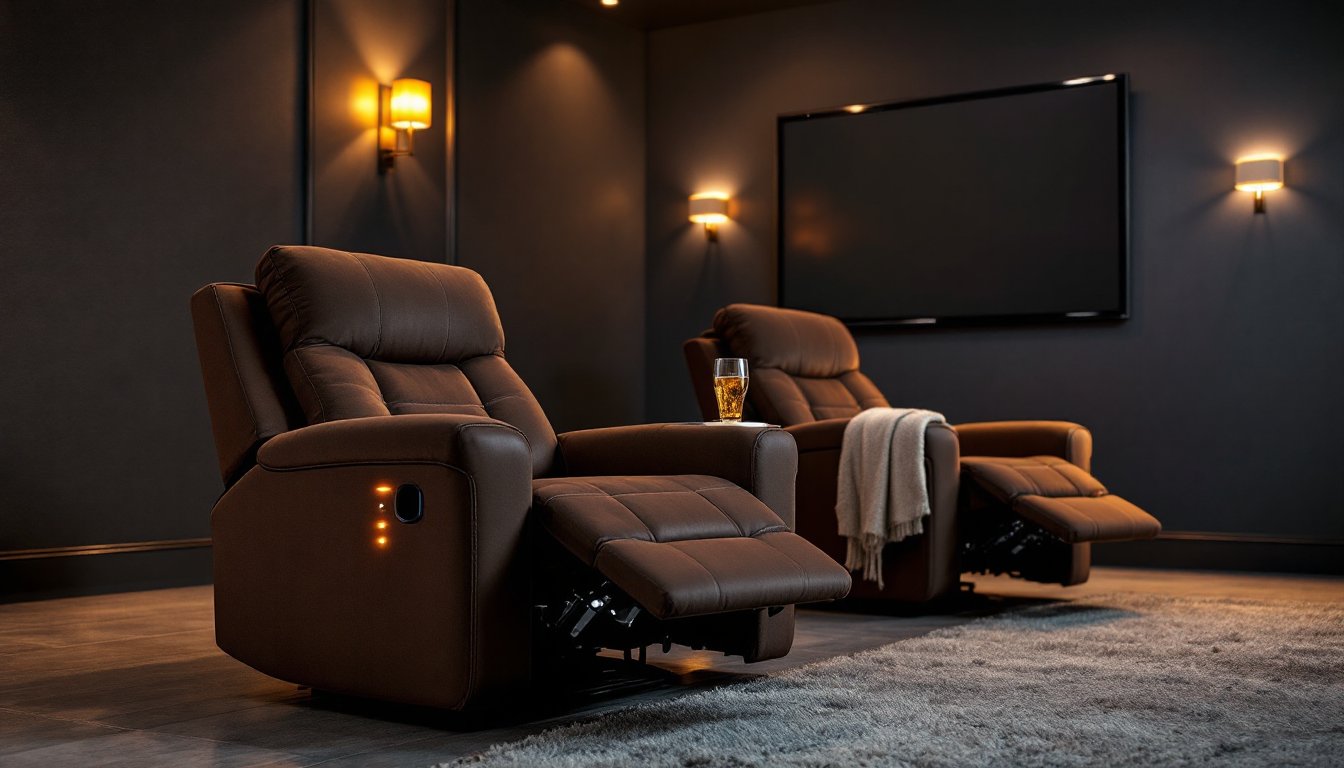
A home theater sofa recliner isn’t just another piece of furniture, it’s the anchor of your viewing experience. Whether you’re settling in for a movie marathon or catching the big game, the right recliner can make hours of comfort feel effortless. Unlike standard couches, theater recliners are purpose-built with motorized mechanisms, premium cushioning, and features like cup holders and USB ports. But not all recliners are created equal. This guide walks you through the key features, materials, and considerations that separate a good theater recliner from one you’ll regret buying. We’ll cover what comfort really means, how to measure your space properly, and how to keep your investment looking sharp for years to come.
Table of Contents
ToggleKey Takeaways
- A quality home theater sofa recliner requires a seat depth of 20–25 inches, high-density foam cushioning (2.0+ pounds per cubic foot), and a smooth reclining mechanism from upright to flat to prevent sagging and ensure lasting comfort.
- Choose between manual, power, or zero-gravity reclining mechanisms based on your needs: power recliners offer convenience and multiple independent motors for couples, while manual recliners are simpler and more reliable.
- Fabric selection impacts durability and maintenance—microfiber and performance fabrics resist stains and are ideal for theater rooms where eating and drinking occur, while genuine leather requires annual conditioning but ages beautifully.
- Solid hardwood frames with eight-way hand-tied or sinuous springs significantly outlast particle-board construction, extending your recliner’s lifespan from 3–5 years to 10–15 years.
- Measure your room’s floor space (accounting for doorways, traffic flow, and 12–18 inches of footrest clearance) before purchasing, and position your recliner in a corner or against a wall to avoid disrupting viewers.
- Protect your investment through proper setup (white-glove delivery recommended), climate control, regular maintenance of motorized components, and extended warranty coverage to avoid costly electrical repairs.
What Makes a Great Home Theater Recliner
Comfort and Support Features
Comfort isn’t subjective when it comes to recliners, it’s measurable. A quality theater recliner should have a seat depth between 20 and 25 inches (actual cushion depth, not including the backrest), which gives your thighs proper support without cutting off circulation at the back of your knees. The backrest should recline smoothly from upright (about 110 degrees) to fully flat or near-flat, with a footrest that extends and retracts without lag.
Look for recliners with high-density foam cushioning, ideally 2.0 pounds per cubic foot or denser. This resists sagging over time, cheap foam compresses after a season or two. Built-in lumbar support (an adjustable or contoured section in the lower back) makes a real difference during longer viewing sessions. If the recliner offers adjustable headrests or neck pillows, test them first: some add comfort, while others feel plasticky and cheaply made.
Motor-driven recliners offer convenience that manual ones can’t match, especially if multiple people use the chair. A quality motor hums quietly and moves steadily, avoid stuttering or jerky movement. Some recliners include memory presets that return to your favorite positions with a button press, which is genuinely useful if you share the chair.
Materials and Durability
Fabric choice defines both longevity and maintenance. Genuine leather ages beautifully but stains easily and can dry out if not conditioned annually. Bonded leather (a polyurethane coating on fabric backing) costs less, hides stains better, and requires minimal care, but it cracks and peels after 3-5 years of heavy use. For theater rooms where you’re eating and drinking, microsuede or microfiber fabrics resist stains naturally and wipe clean easily. They also come in more color options than leather.
Performance fabrics (branded as Crypton, Sunbrella, or similar) treat standard upholstery to repel moisture and stains. They cost more upfront but extend the life of your recliner considerably. Power recliners with electronics demand extra consideration, ensure the motor and electrical connections are sealed and positioned away from common spill zones.
The frame matters as much as the covering. Solid hardwood frames (like kiln-dried oak or beech) outlast particle-board construction by decades. Check for eight-way hand-tied springs or sinuous (zigzag) springs under the cushion, these support the frame and distribute weight evenly. A recliner with a solid frame and good springs can last 10-15 years: cheap construction gives you 3-5.
Key Features to Look For When Shopping
Reclining Mechanisms and Functionality
Recliners come in three main types: manual, power, and zero-gravity.
Manual recliners use a lever or handle to activate the reclining mechanism. They’re mechanical, simple, and reliable, no batteries or wiring to fail. The trade-off is physical effort, which matters less for one person but becomes annoying if three people take turns during a movie night.
Power recliners use electric motors to drive the reclining action. They often include USB outlets, reading lights, and massage functions. Higher-end models feature multiple motors, one for the seat back, another for the footrest, and sometimes a third for lumbar adjustments. This independence lets one person recline fully while another sits upright, useful for couples with different preferences. But, power recliners need reliable electrical circuits and can be pricey to repair if the motor fails.
Zero-gravity recliners (less common for theater use) position your body weight evenly across the seat and back, reducing spinal pressure. They’re excellent for people with back pain but can feel odd if you’re used to traditional reclining. They’re also typically more expensive and take up more floor space.
When comparing mechanisms, test the reclining speed and smoothness. Does it feel powerful enough to lift your legs easily while reclined? Does it lock firmly in every position, or does it creep? Does the mechanism make noise under your weight? These details compound over hundreds of uses.
Extra features vary widely. Cup holders and side tables should hold a standard 16-ounce glass without wobbling. Built-in outlets and USB ports are convenient but double-check that they’re positioned logically, a USB port facing the back wall is useless. Massage and heating functions add cost and complexity: decide whether you’ll genuinely use them. Many end up as novelty features that break within two years.
Space and Size Considerations
Theater recliners need room to operate. A single recliner consumes roughly 36 inches wide and needs 12 to 18 inches of clearance in front (measured from the footrest when fully extended) to avoid stubbing your feet. Double recliners or loveseat-style theater couches can exceed 70 inches wide and demand substantial floor space.
Before shopping, measure your theater room’s available floor space. Account for doorway widths, a 36-inch-wide recliner won’t fit through a 32-inch doorway. If your recliner must navigate stairs or tight corners, confirm those clearances too. A common mistake is buying the largest recliner that barely fits through the door, then realizing it won’t fit your actual seating arrangement.
Consider the viewing distance and angle. Recliners with shallow seat depths and aggressive recline angles work well if you’re sitting 8-10 feet from the screen. If you’re closer (5-7 feet), you want a more upright seating posture and shallower recline angle to avoid neck strain. Measure your seating distance and test recliners at that angle if possible.
Think about traffic flow. A theater recliner in the middle of a pathway defeats the purpose, you’ll be constantly interrupted. Ideally, position recliners in a dead-end corner or against a wall so viewers can enter and exit without clambering over others. Theaters built into basements often have limited layout options, so measure twice and commit to your placement before purchasing.
Setup, Maintenance, and Long-Term Care
Most theater recliners arrive in a partially assembled state. Legs, arms, or the back section may need bolting together, a job for two people and basic tools (typically a wrench and Phillips head screwdriver). Assembly usually takes 45 minutes to 2 hours. Power recliners require additional time to route electrical cords through the frame and ensure safe connections.
Delivery logistics matter. White-glove delivery services (offered by many retailers for an extra fee) handle placement and assembly, then haul away packaging. DIY delivery saves money but demands a vehicle large enough to transport the recliner safely. Recliners are bulky and fragile: securing them poorly in a truck can cause frame damage.
Once placed, your recliner needs climate control. Leather dries out in very dry environments: leather conditioner applied annually keeps it supple. Microfiber and performance fabrics are more forgiving but still benefit from a dry, temperature-stable room. Avoid placing recliners in direct sunlight, which fades upholstery and accelerates wear.
Cleaning depends on fabric type. Microfiber can be vacuumed gently and spot-cleaned with mild soap and water. Leather requires leather-specific cleaners and conditioners. Power recliners with electronic components should never be hosed down or heavily wetted, a damp microfiber cloth suffices. Most manufacturers include care guides: follow them to avoid voiding warranties.
Regular maintenance extends recliner life significantly. Check motorized components every few years for signs of strain (noise, sluggish movement). Tighten bolts on manual lever mechanisms periodically, as vibration can loosen them. If a mechanism starts sticking, lubricate joints with silicone spray, not WD-40, which attracts dust. Theater recliners with built-in electronics should be inspected annually, most reputable manufacturers offer affordable service plans that cover electrical components. When shopping, ask whether the seller offers extended warranties or maintenance packages. A 5-year coverage plan costs more upfront but protects against expensive motor or electrical failures after year three.