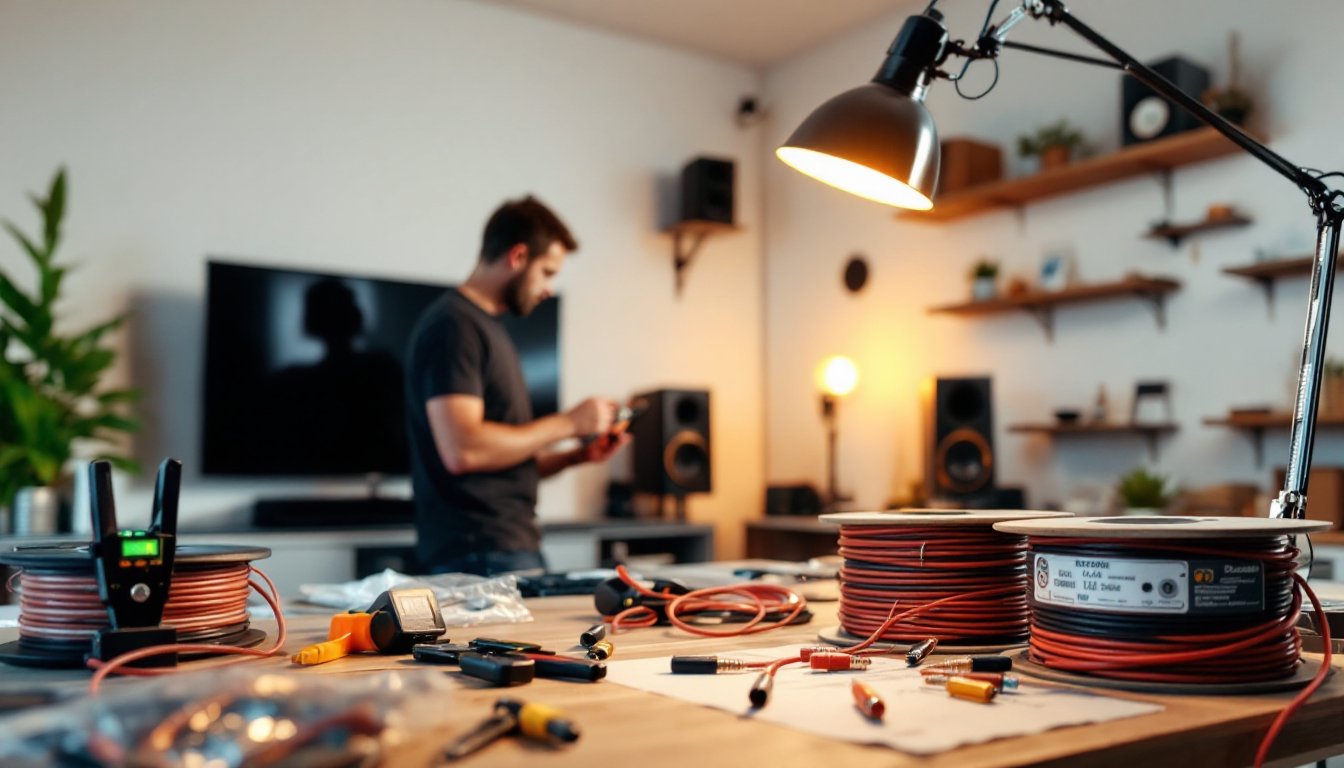
Your home theater’s audio quality depends on more than just expensive speakers and amplifiers, the speaker wire connecting them plays a critical role that many DIYers overlook. Choosing the wrong wire can introduce signal loss, hum, and muddiness that no amount of tweaking your receiver’s settings will fix. The good news: picking the right home theater speaker wire isn’t complicated once you understand gauge, shielding, and material quality. This guide walks you through the key factors that matter, what to skip, and how to install it properly so your investment in quality audio actually reaches your ears.
Table of Contents
ToggleKey Takeaways
- Choose home theater speaker wire gauge based on distance: 14 AWG for runs under 50 feet, 12 AWG for longer runs, and 10 AWG for distances over 100 feet to prevent signal loss and volume degradation.
- Use unshielded speaker wire for most installations, but switch to shielded wire if runs pass near power cables, fluorescent lights, or wireless equipment to eliminate hum and interference.
- Purchase 99.9% pure copper speaker wire in bulk spools, and avoid CCA (copper-clad aluminum) alternatives that require larger gauges to match copper performance.
- Always use identical wire gauge for matched speakers (both fronts, both rears, center, and subwoofer) to prevent tonal imbalances and phase issues that compromise imaging.
- Install speaker wire with proper termination using banana plugs or spade lugs rather than bare twisted wire, and use only CL2/CL3 rated in-wall cable for concealed installations to ensure safety and reliability.
- Measure twice and plan your entire wire routing on paper before purchasing, accounting for service loops and obstacles, which takes 10 minutes and prevents costly installation mistakes.
Understanding Speaker Wire Gauge and Why It Matters
Speaker wire gauge, measured in AWG (American Wire Gauge), directly affects how much resistance the wire introduces between your amp and speakers. Lower numbers mean thicker wire and lower resistance. Most home theater setups use 14 AWG, 12 AWG, or 10 AWG wire.
For runs under 50 feet, 14 AWG works fine for front left and right speakers. Go longer than 50 feet or powering a subwoofer? Step up to 12 AWG. If your amp sits more than 100 feet from rear surrounds or you’re running multiple runs through walls, 10 AWG prevents noticeable volume loss and signal degradation. Using wire that’s too thin for the distance introduces resistance that forces your amplifier to work harder, increasing heat and potentially reducing output.
Don’t overthink this. Heavier isn’t always better, 10 AWG is overkill for a 20-foot run to bookshelf speakers. Pick the right gauge for your room layout first, then focus on the other factors.
Shielded vs. Unshielded Speaker Wire: What’s the Difference?
Unshielded speaker wire is standard for most installations. It’s cheaper, easier to work with, and perfectly adequate when run properly. The two conductors sit side-by-side or twisted together with no extra jacket.
Shielded speaker wire wraps a conductive shield around the conductors to block electromagnetic interference (EMI) from nearby power cables, fluorescent lights, or wireless routers. You’ll see shielding recommended when speaker runs pass directly alongside AC power lines, cross unshielded electrical conduits, or run near active wireless equipment.
Honestly? Most home theater rooms don’t need shielded wire if you’re thoughtful about routing. Keep speaker wire away from power cables, run them on opposite sides of a wall stud or at least 6 inches apart when they must cross. If you’re hearing a buzz or hum even after good connections, then shielded wire becomes worth the extra cost and the slightly stiffer handling. Shielded wire also includes a ground conductor you’ll need to terminate properly, more on that during installation.
Speaker Wire Quality: Copper Content and Material Considerations
Copper is the standard conductor material, and purity matters more than exotic alternatives. 99.9% pure copper is the industry norm and performs excellently. Avoid marketing hype around “oxygen-free copper” (OFC) or “high-purity” claims that charge triple the price for unmeasurable differences in a home theater setting.
Inexpensive speaker wire often uses CCA (copper-clad aluminum) to cut costs. Aluminum’s lower conductivity means you’d need a gauge size larger than copper to match performance, a CCA 12 AWG performs like 14 AWG copper. If the price seems too good to be true, check the spec sheet.
Solid vs. stranded copper is a practical choice: solid wire is stiffer and easier to fish through walls, while stranded is more flexible for tight spaces and less likely to break during bending. For wall-in-wall installations, solid works better. For behind-cabinet runs with tight curves, go stranded. The sonic difference is negligible: pick based on installation ease and durability in your setup.
How to Measure the Right Distance for Your Setup
Accurate distance measurement prevents you from buying too much wire (waste) or too little (forcing splices). Measure from your receiver’s speaker terminals to each speaker location, adding 2–3 feet for service loops behind components and speakers, this slack lets you disconnect and reconnect without re-routing.
Draw a quick sketch of your room showing the receiver location and each speaker (front left, center, front right, rear surrounds, and subwoofer if powered). Mark wall runs, indicate whether you’re running wire inside walls or along baseboards, and note any obstacles like doorways or existing conduit. This takes 10 minutes and prevents costly mistakes.
Buy wire in bulk spools when possible, 25, 50, or 100-foot rolls cost less per foot than pre-terminated pairs. You’ll use the leftover for a future project, and bulk spools often feature better quality than bargain-bin pre-cut lengths. Double-check the gauge on the spool’s label before checkout: retailers sometimes mix gauges on the same shelf.
Installation Tips for Optimal Sound and Safety
Before you cut, measure twice. Strip about 1/2 inch of insulation from each conductor end using a wire stripper set to the correct gauge, too aggressive and you’ll nick the copper, reducing cross-section and increasing resistance.
Termination matters. Bare wire ends twisted directly into receiver terminals work in a pinch but loosen over time. Use banana plugs (the spring-loaded cylinders) for secure, repeatable connections. Screw-down terminals accept banana plugs, bare wire, or spade lugs: go with whichever feels tight and doesn’t slip. Proper contact means no intermittent dropouts or crackling.
When running wire through walls, use in-wall rated (CL2 or CL3) cable marked for concealed installations, cheaper unrated wire poses a fire hazard in wall cavities. Drill holes at least 1-1/4 inches from studs or top/bottom plates to avoid hitting nails during future drywall work. Use a fish tape or coat hanger to pull wire through existing conduit: never force wire by pushing, you’ll damage insulation.
Wear safety glasses when stripping and cutting. Keep wire away from water pipes and HVAC ducts. If you’re not comfortable fishing wire through walls, hire an electrician, it’s not a structural job but takes experience to do right without damaging existing systems. Soldering speaker wire connections inside walls violates code in many jurisdictions and creates a fire hazard: mechanical termination only.
Common Mistakes to Avoid When Selecting Speaker Wire
Mixing gauges between left and right channels causes subtle tonal imbalances. Always use identical wire for matched speakers, both fronts, both rears, the center, and sub. Different gauges = different impedance = phase issues your ear detects as off-center imaging.
Running too-light wire too far is the most common mistake. A 50-foot run of 14 AWG to a rear surround introduces enough resistance to make that speaker audibly quieter. Future regret is guaranteed: plan for the worst-case run first.
Neglecting polarity (positive and negative) flips phase, making your center image collapse and bass hollow out. Mark positive (red) and negative (black) clearly on both ends before installation. If you inherit a system and don’t know polarity, reverse one speaker at a time, listen, and leave it as-is if it sounds better.
Cram too many connections into underfilled in-wall conduit and you risk crushing insulation or trapping moisture. Conduit should be no more than 50% full: if you’re running 4 speaker cables plus power, use 3/4-inch conduit or separate runs. Also, never rely on bare or daisy-chained connections inside walls, every splice point is a future failure point and potential fire hazard.
Overbuying premium wire for short runs wastes money. A 15-foot 14 AWG run to your front speakers doesn’t benefit from $200-per-foot boutique cable. Spend on quality connections and proper installation instead. Conversely, the most expensive boutique wire can’t overcome poor termination or bad room acoustics.
Conclusion
Choosing the right speaker wire boils down to matching gauge to distance, confirming copper quality, and ensuring safe, secure termination. Plan your routes, measure carefully, and don’t skip proper installation, that’s where most problems originate. When you do it right, the wire disappears and you hear exactly what your speakers and amplifier are capable of delivering. Your future self, enjoying clear movies and immersive games, will thank you for the attention to this often-overlooked detail.